Nourishing Slow Cooker Bone Broth
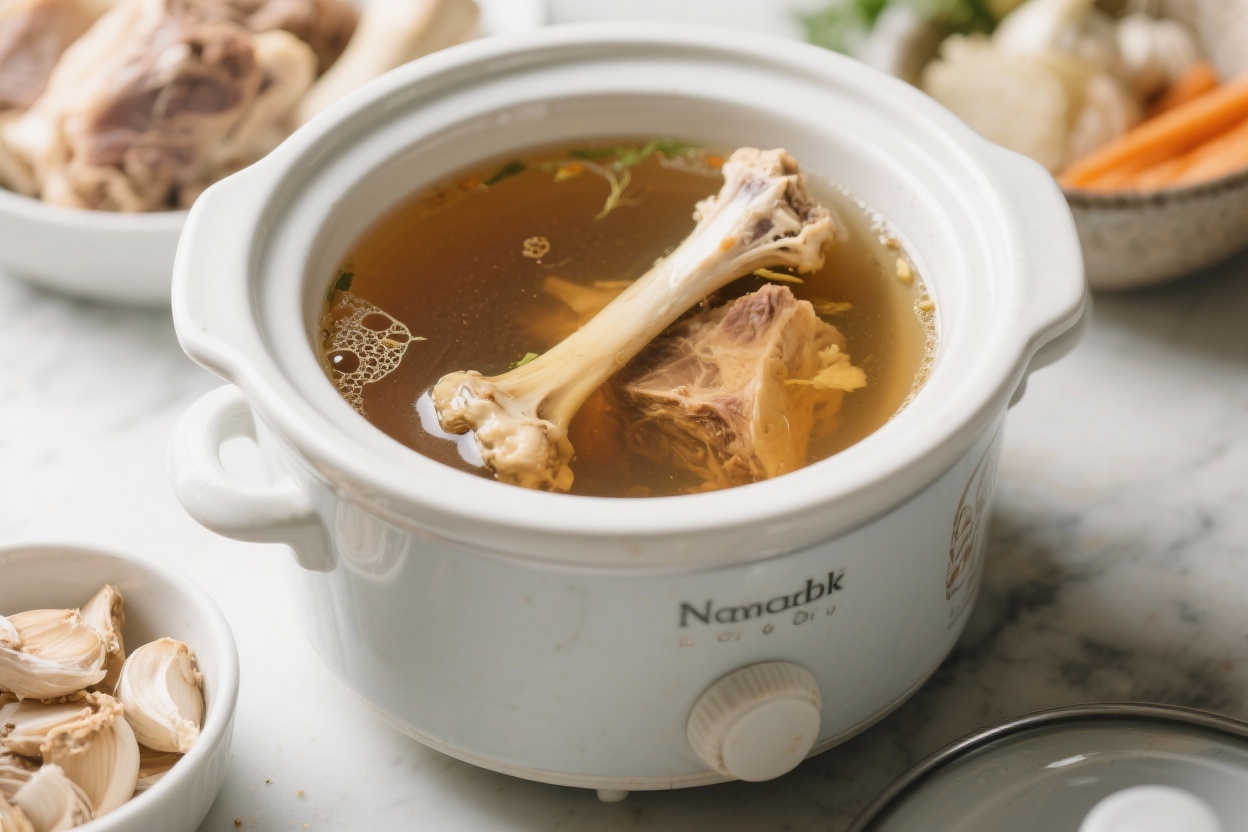
Bone broth is one of those quiet comforts that makes everything better. It warms you up, supports your body, and turns simple meals into something special. With a slow cooker, it’s mostly hands-off, and your kitchen will smell inviting all day.
This version is straightforward, flexible, and reliable—even if you’ve never made broth before. Keep a batch in the fridge, and you’ll always have a base for soups, sauces, or a soothing mug to sip.
Why This Recipe Works
- Slow, gentle heat coaxes out collagen and minerals without boiling the flavor away. The result is a clean, rich broth with body.
- Roasting the bones first builds deep flavor and a golden color.
It also helps remove excess fat and “meaty” aromas.
- A splash of acid (vinegar) helps pull nutrients from the bones, leading to a more gelatin-rich broth once cooled.
- Balanced aromatics keep the broth versatile. You’ll taste subtle sweetness and warmth without overshadowing the base.
- Set-it-and-forget-it convenience means you can run it overnight. The slow cooker prevents scorching and frees up your stovetop.
Ingredients
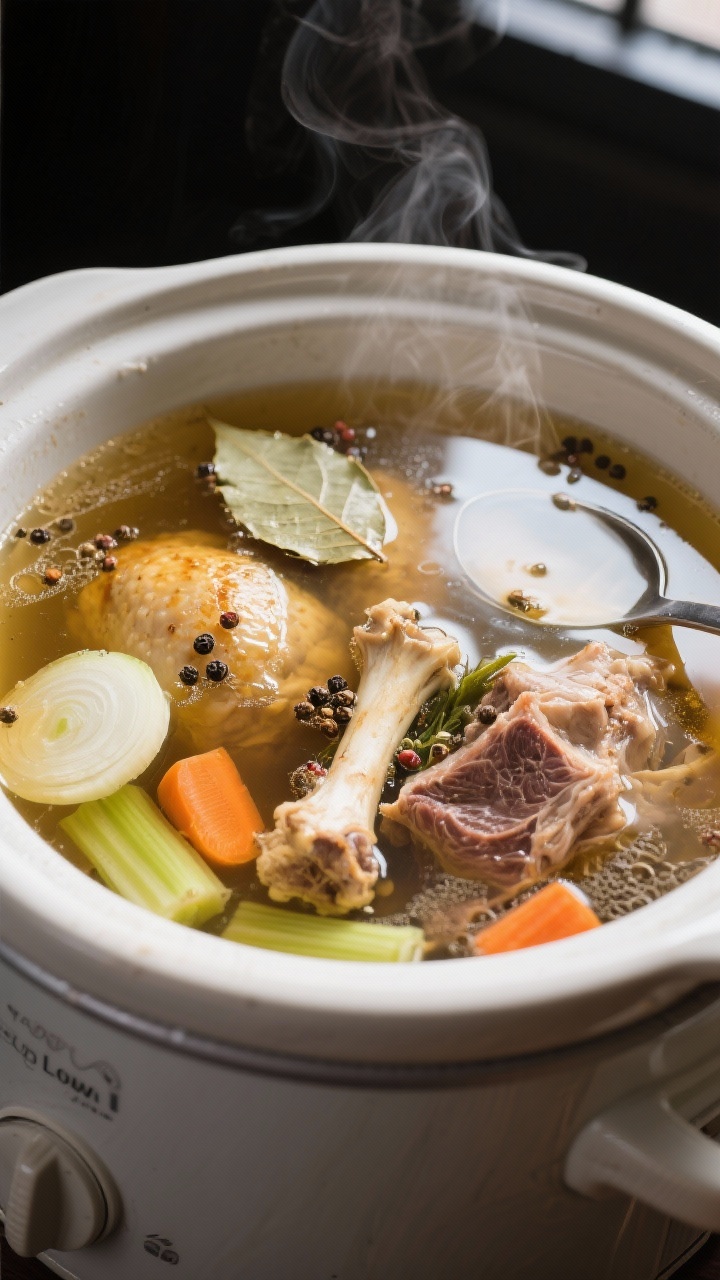
- 3–4 pounds mixed bones (chicken carcasses, wings, feet, or beef marrow/knuckle bones; a combo works well)
- 1 large onion, quartered (no need to peel)
- 2 carrots, cut into chunks
- 2 celery stalks, cut into chunks
- 6–8 garlic cloves, lightly smashed
- 2–3 tablespoons apple cider vinegar (or white wine vinegar)
- 2–3 bay leaves
- 10–12 whole peppercorns
- Small handful of fresh parsley or thyme (optional)
- 1–2 teaspoons salt, to taste (or wait to season at the end)
- Water, enough to cover the bones by about 1 inch
- Optional: 1–2 inches fresh ginger, sliced; 1 piece kombu (for umami, remove after 30 minutes); mushroom stems for extra depth
How To Make Slow Cooker Bone Broth
- Roast the bones (recommended): Arrange bones on a baking sheet and roast at 425°F (220°C) for 30–40 minutes, turning once, until browned.
This deepens flavor and color.
- Load the slow cooker: Add the roasted bones, onion, carrots, celery, garlic, bay leaves, peppercorns, and any optional herbs or add-ins.
- Add vinegar and water: Pour in the vinegar, then add enough cold water to cover the bones by about an inch. Don’t overfill; leave room to gently simmer.
- Set and simmer: Cook on Low for 12–24 hours. For a lighter chicken broth, 12–16 hours is great.
For beef bones, aim for 18–24 hours. Keep the lid on for consistent heat.
- Skim as needed: If foam or excess fat collects on top, skim it off with a spoon. Some fat is fine; you can adjust later.
- Strain carefully: Turn off the cooker and let it cool slightly.
Use tongs to remove large pieces. Strain through a fine-mesh sieve or cheesecloth into a large bowl or pot.
- Season to taste: Add salt gradually once strained, or leave it unsalted if you’ll use it in recipes that already include salt.
- Chill and de-fat: Cool quickly (see storage tips below). Once cold, a layer of fat will solidify on top. Remove some or all of the fat for a cleaner taste, or keep a thin layer for protection and flavor.
- Store or sip: Transfer to jars or containers.
Reheat gently to sip as-is, or use as the base for soups, grains, and sauces.
Storage Instructions
- Cool fast: Divide hot broth into shallow containers or set the pot in an ice bath to bring the temperature down quickly. This helps keep it fresh.
- Refrigerate: Keeps 4–5 days in the fridge. A solid gel is a good sign; it will liquefy when warmed.
- Freeze: Freeze for up to 6 months.
Leave headspace in jars to prevent cracking, or use freezer-safe containers or bags laid flat.
- Portion smart: Freeze in 1–2 cup portions or in ice cube trays for easy use in sauces and sautés.
- Reheat gently: Warm on the stovetop over low heat. Avoid boiling to preserve flavor and aroma.
Health Benefits
- Collagen and gelatin: Slow cooking breaks down connective tissue, releasing gelatin that may support joint comfort and gut lining.
- Minerals and amino acids: Bone broth provides small amounts of minerals and compounds like glycine and proline that support overall wellness.
- Hydration and comfort: Sipping warm broth can be soothing and hydrating, especially during cold weather or recovery days.
- Protein boost: While not a high-protein food, a cup adds a gentle bump and can make meals more satisfying.
Pitfalls to Watch Out For
- Boiling instead of simmering: A rolling boil can cloud the broth and dull the flavor. Keep the slow cooker on Low for steadiness.
- Overcrowding with aromatics: Too many herbs or spices can dominate.
Keep it simple so the broth stays versatile.
- Under-salting or over-salting: Salt at the end if you plan to cook with the broth. This prevents overly salty soups and sauces later.
- Skipping the vinegar: It’s a small step that helps extract goodness from the bones. You won’t taste it in the final broth.
- Not roasting bones: You can skip it, but roasting adds depth and reduces any “flat” taste.
- Poor cooling: Letting broth sit warm too long can affect quality.
Cool promptly before storing.
Recipe Variations
- Classic chicken: Use chicken carcasses, wings, and feet for a light, golden broth that gels beautifully.
- Beef and marrow: Combine knuckle, marrow, and oxtail for a darker, heartier broth. Ideal for French onion soup or ramen.
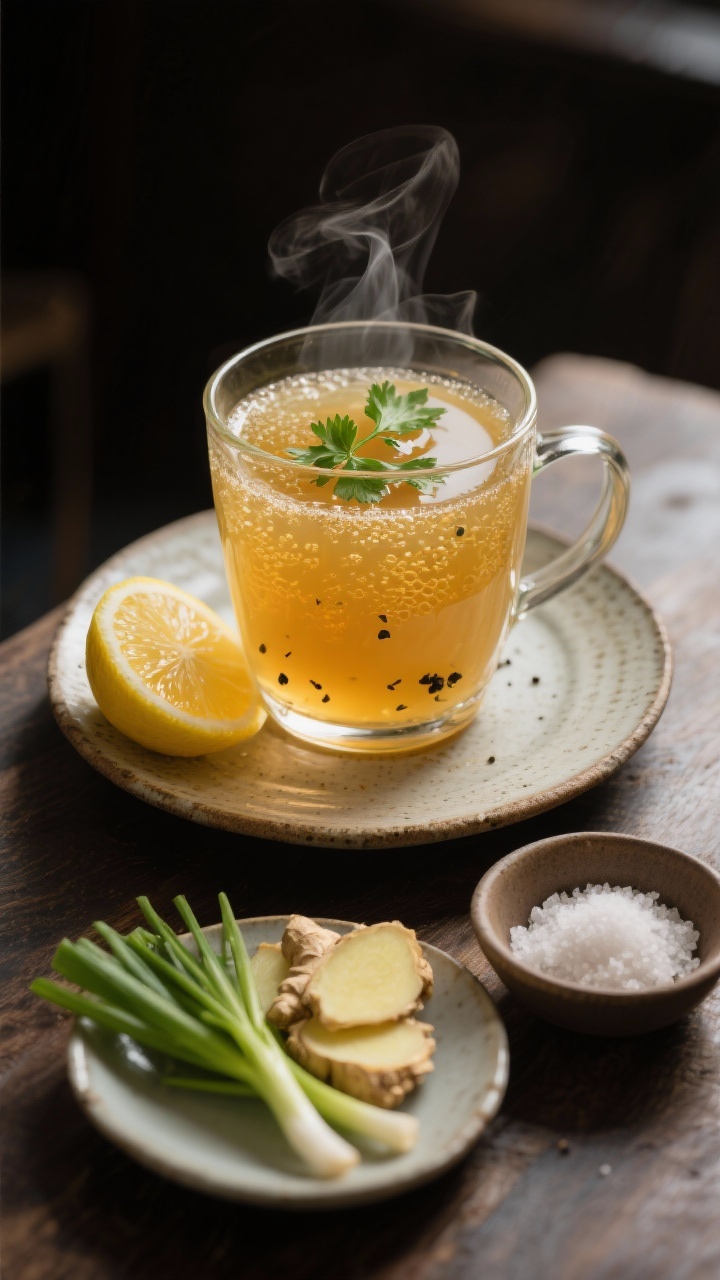
- Asian-inspired: Add ginger, scallions, a splash of rice vinegar, and a piece of kombu (remove after 30 minutes). Finish with a few drops of toasted sesame oil when serving.
- Herb garden: Use thyme, parsley stems, and a sprig of rosemary for a bright, savory profile.
Great for risotto and pan sauces.
- Roasted vegetable boost: Add roasted mushrooms, leeks, or parsnips for layered sweetness and umami.
- Low-waste broth: Save clean onion ends, carrot peels, and celery tops in a freezer bag. Add to the slow cooker when you make a batch.
FAQ’s For Slow Cooker Bone Broth
Why didn’t my broth gel?
A strong gel comes from collagen. If your broth stays liquid, try adding more collagen-rich parts like chicken feet, wings, or beef knuckles next time, and simmer longer. It will still be nutritious and delicious even without a firm gel.
Can I reuse bones for a second batch?
Yes, you can do a “second extraction,” though it will be lighter. Add fresh aromatics and simmer again for 10–12 hours. It’s great for cooking grains or making light soups.
Do I have to roast the bones?
No, but roasting adds depth and a richer color. If you’re short on time, skip it and rely on good aromatics. You can also broil the bones for 10 minutes as a quick compromise.
Is it okay if the broth looks cloudy?
Cloudiness is harmless and usually comes from boiling or vigorous stirring. It doesn’t affect safety. For a clearer broth, keep the heat gentle and avoid shaking during straining.
Can I make it without vinegar?
You can, but a small amount of acid helps with extraction. Lemon juice or white wine can stand in if you prefer a different flavor profile.
How much salt should I add?
Keep it light—about 1–2 teaspoons for the whole batch—or leave it unsalted. You can always season the final dish to taste.
What should I do with the fat layer?
Chill the broth and lift off the solid fat. Use a little for cooking eggs or vegetables, or discard. Leaving a thin layer on top can protect the broth when stored.
Final Thoughts
A slow cooker bone broth is a practical, comforting staple that asks for very little and gives a lot back. With a few pantry aromatics and time, you’ll have a rich, flexible base ready for sipping or cooking.
Make it your own with small tweaks, and keep a stash in the freezer for busy days. Once you get into the rhythm, you’ll wonder how you ever cooked without it.
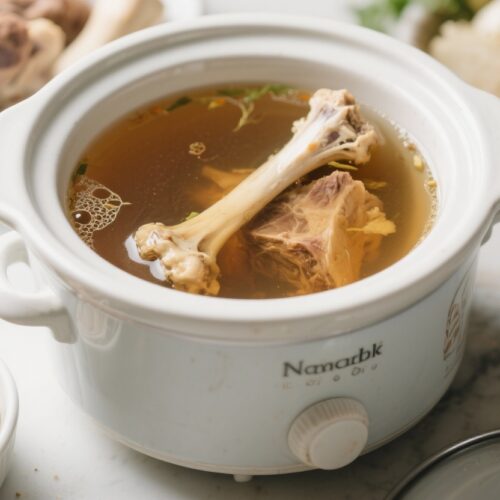
Nourishing Slow Cooker Bone Broth

Ingredients
- 3–4 pounds mixed bones (chicken carcasses, wings, feet, or beef marrow/knuckle bones; a combo works well)
- 1 large onion, quartered (no need to peel)
- 2 carrots, cut into chunks
- 2 celery stalks, cut into chunks
- 6–8 garlic cloves, lightly smashed
- 2–3 tablespoons apple cider vinegar (or white wine vinegar)
- 2–3 bay leaves
- 10–12 whole peppercorns
- Small handful of fresh parsley or thyme (optional)
- 1–2 teaspoons salt, to taste (or wait to season at the end)
- Water, enough to cover the bones by about 1 inch
- Optional: 1–2 inches fresh ginger, sliced; 1 piece kombu (for umami, remove after 30 minutes); mushroom stems for extra depth
Instructions
- Roast the bones (recommended): Arrange bones on a baking sheet and roast at 425°F (220°C) for 30–40 minutes, turning once, until browned. This deepens flavor and color.
- Load the slow cooker: Add the roasted bones, onion, carrots, celery, garlic, bay leaves, peppercorns, and any optional herbs or add-ins.
- Add vinegar and water: Pour in the vinegar, then add enough cold water to cover the bones by about an inch. Don’t overfill; leave room to gently simmer.
- Set and simmer: Cook on Low for 12–24 hours. For a lighter chicken broth, 12–16 hours is great. For beef bones, aim for 18–24 hours. Keep the lid on for consistent heat.
- Skim as needed: If foam or excess fat collects on top, skim it off with a spoon. Some fat is fine; you can adjust later.
- Strain carefully: Turn off the cooker and let it cool slightly. Use tongs to remove large pieces. Strain through a fine-mesh sieve or cheesecloth into a large bowl or pot.
- Season to taste: Add salt gradually once strained, or leave it unsalted if you’ll use it in recipes that already include salt.
- Chill and de-fat: Cool quickly (see storage tips below). Once cold, a layer of fat will solidify on top. Remove some or all of the fat for a cleaner taste, or keep a thin layer for protection and flavor.
- Store or sip: Transfer to jars or containers. Reheat gently to sip as-is, or use as the base for soups, grains, and sauces.