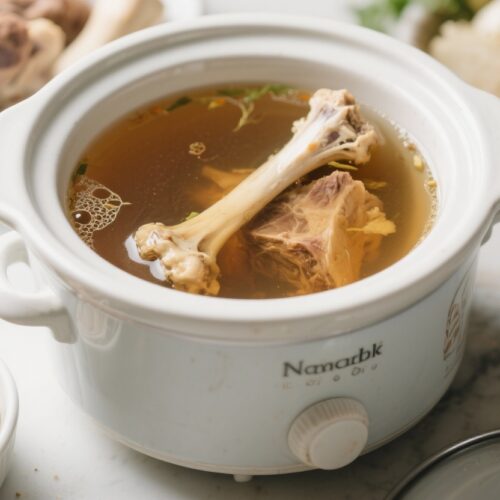
Nourishing Slow Cooker Bone Broth

Slow cooker bone broth simmered low and slow for rich, nourishing flavor. An easy homemade staple packed with comforting goodness.
Ingredients
- 3–4 pounds mixed bones (chicken carcasses, wings, feet, or beef marrow/knuckle bones; a combo works well)
- 1 large onion, quartered (no need to peel)
- 2 carrots, cut into chunks
- 2 celery stalks, cut into chunks
- 6–8 garlic cloves, lightly smashed
- 2–3 tablespoons apple cider vinegar (or white wine vinegar)
- 2–3 bay leaves
- 10–12 whole peppercorns
- Small handful of fresh parsley or thyme (optional)
- 1–2 teaspoons salt, to taste (or wait to season at the end)
- Water, enough to cover the bones by about 1 inch
- Optional: 1–2 inches fresh ginger, sliced; 1 piece kombu (for umami, remove after 30 minutes); mushroom stems for extra depth
Instructions
- Roast the bones (recommended): Arrange bones on a baking sheet and roast at 425°F (220°C) for 30–40 minutes, turning once, until browned. This deepens flavor and color.
- Load the slow cooker: Add the roasted bones, onion, carrots, celery, garlic, bay leaves, peppercorns, and any optional herbs or add-ins.
- Add vinegar and water: Pour in the vinegar, then add enough cold water to cover the bones by about an inch. Don’t overfill; leave room to gently simmer.
- Set and simmer: Cook on Low for 12–24 hours. For a lighter chicken broth, 12–16 hours is great. For beef bones, aim for 18–24 hours. Keep the lid on for consistent heat.
- Skim as needed: If foam or excess fat collects on top, skim it off with a spoon. Some fat is fine; you can adjust later.
- Strain carefully: Turn off the cooker and let it cool slightly. Use tongs to remove large pieces. Strain through a fine-mesh sieve or cheesecloth into a large bowl or pot.
- Season to taste: Add salt gradually once strained, or leave it unsalted if you’ll use it in recipes that already include salt.
- Chill and de-fat: Cool quickly (see storage tips below). Once cold, a layer of fat will solidify on top. Remove some or all of the fat for a cleaner taste, or keep a thin layer for protection and flavor.
- Store or sip: Transfer to jars or containers. Reheat gently to sip as-is, or use as the base for soups, grains, and sauces.
